



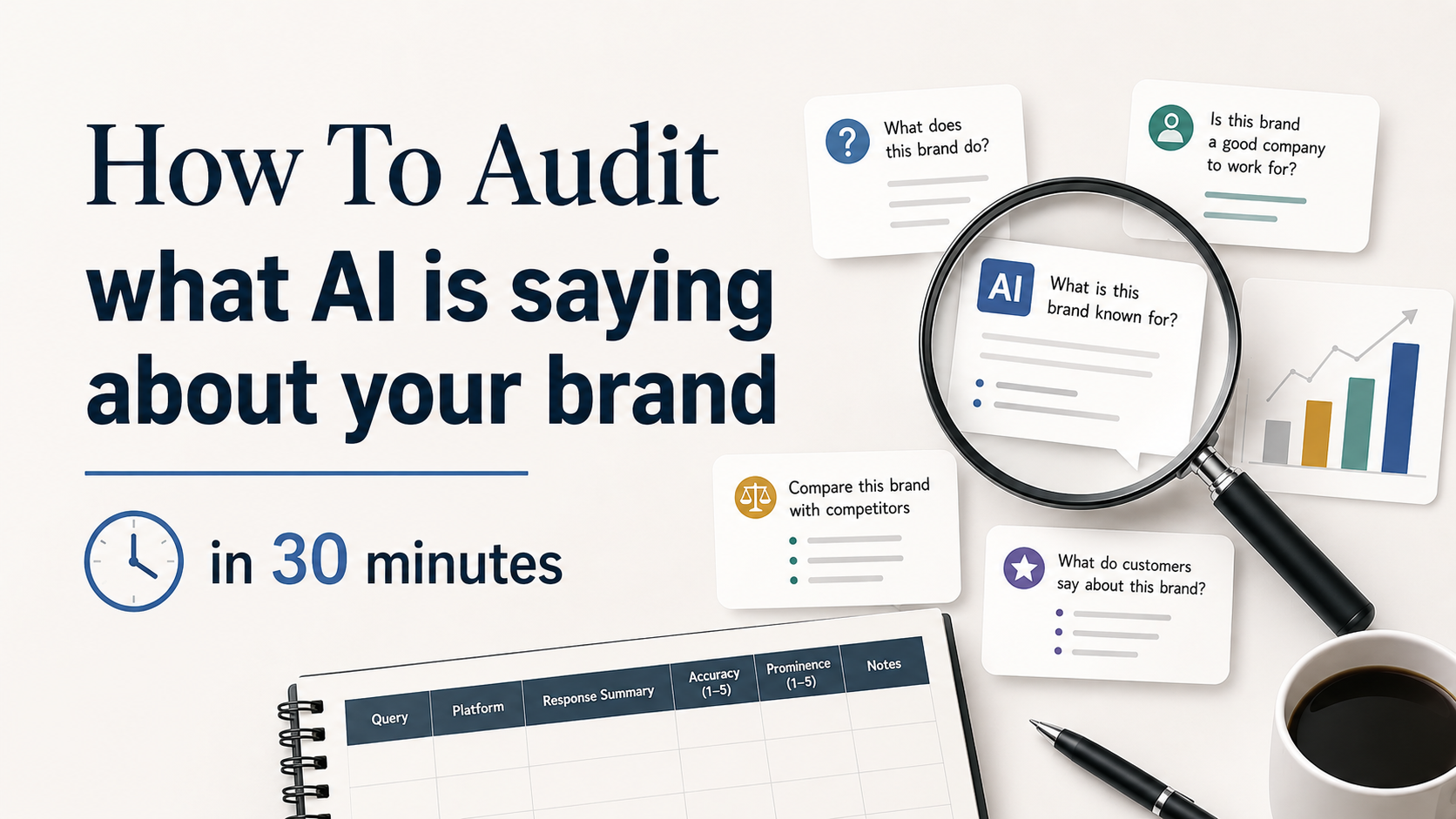
How to audit what AI is saying about your brand in 30 minutes
by Rajiv SinghaAI visitors convert at 4.4x the rate of traditional organic traffic. And AI search traffic is up 527% year on year.
None of that helps you if the AI doesn’t know you exist – or worse, gets you wrong.
Most brands find out what AI says about them by accident. A customer mentions it in a review. A founder asks ChatGPT out of curiosity. A sales call reveals a prospect who “checked with AI first.” By then, the narrative has been forming for months. I love this example from Seer Interactive where AI highlighted the one bad review they got in 24 years and how they tackled it.
The other thing worth knowing: there is no Page 2 in AI search. You’re either in the answer, or you’re not there at all.
A proactive audit takes 30 minutes. It gives you a baseline, surfaces the gaps, and tells you where to focus. Here’s exactly how to run one.
Before you start: why your own website probably isn’t the problem
This is counterintuitive, but important. When an AI answers a question about your brand, it isn’t primarily drawing from your website. It’s drawing from everywhere else – Reddit threads, Quora, Wikipedia, review platforms, industry media, PR coverage. According to McKinsey, a brand’s own website accounts for only 5-10% of the sources AI search references. The other 90-95% is third-party content.
That means a brand with a beautifully written About page but weak third-party presence can still be completely misrepresented. The audit will tell you whether that’s happening.
What you’re looking for
Three things:
- Accuracy – Are the basics right? Are your differentiators present? Is anything just wrong?
- Prominence – Do you show up in the queries your potential customers make before they know you exist?
- Competitive position – How do you compare to competitors in AI-generated responses?
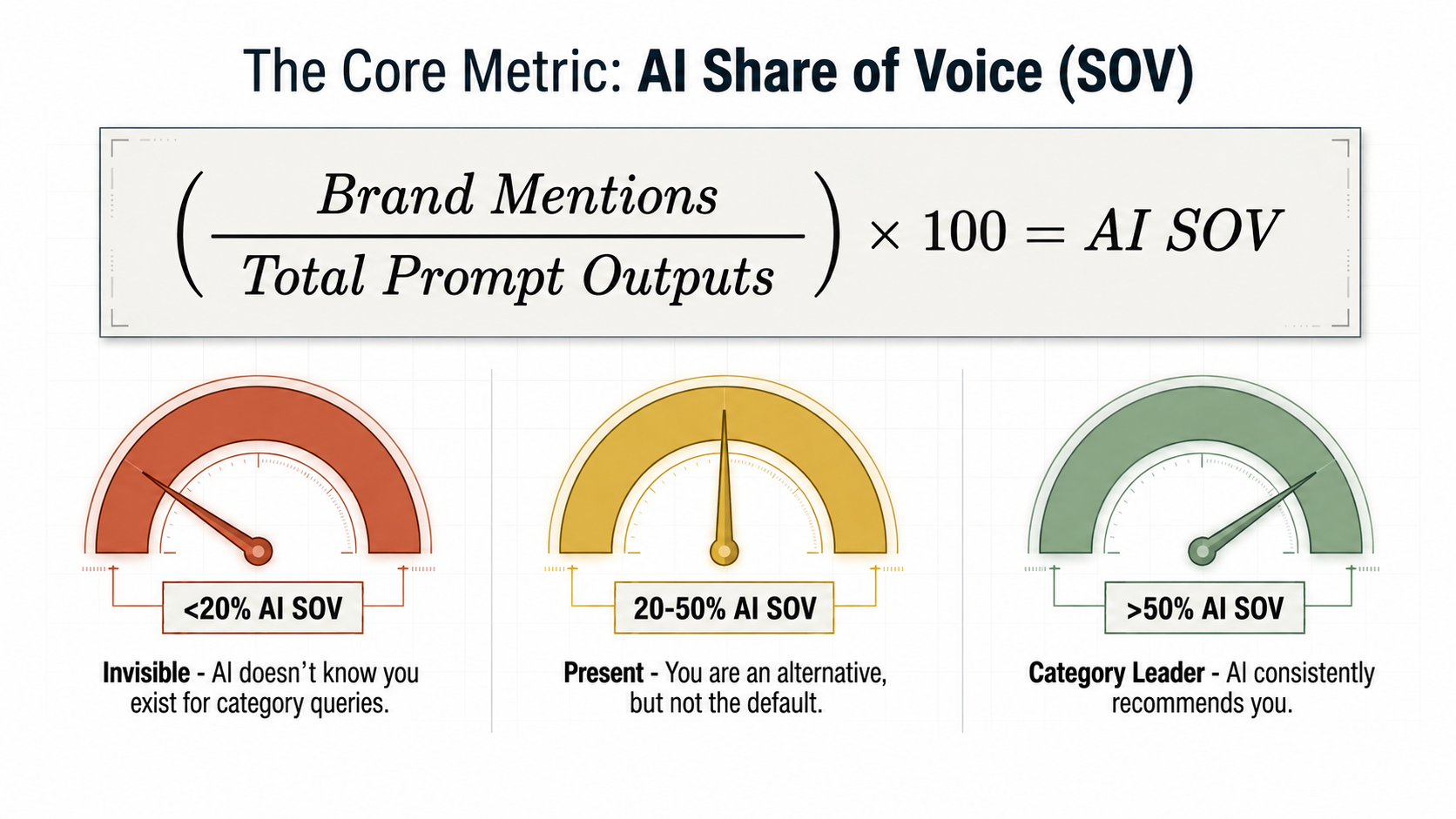
A rough way to frame your results: brands scoring below 20% AI Share of Voice (the proportion of relevant AI responses where your brand appears) are effectively invisible. Between 20-50%, you exist but you’re not the default. Above 50%, AI is consistently recommending you. Most businesses doing this audit for the first time land in the invisible category. That’s fine – knowing is the point.
What you need
- ChatGPT (GPT-4 or later)
- Perplexity AI (free tier works)
- Google Gemini or Google Search with AI Overviews enabled
- A spreadsheet: Query / Platform / Response Summary / Accuracy Score (1-5) / Prominence Score (1-5) / Notes
- 30 minutes
Step 1: build your query set (5 minutes)
Eight to twelve prompts across three categories. The queries you choose determine how useful the audit is – don’t rush this part.
Direct brand queries (3-4 prompts)
- “Tell me about [your brand]”
- “What does [your brand] sell and who is it for?”
- “Is [your brand] ethical / sustainable / B Corp?” (use whichever claim matters to your positioning)
- “What do customers say about [your brand]?”
Category and problem queries (3-4 prompts)
These are the searches your potential customers make before they know you exist. Replace the examples with your actual category and customer problems.
One useful trick: pull language from your own sales calls and customer conversations. The exact phrases buyers use – “I’m looking for something that doesn’t contain X” or “a brand I can trust for Y” – are often better prompts than anything you’d write from scratch, because they’re how people actually talk to AI.
- “What are the most ethical [product category] brands?”
- “Best sustainable [product category] for [target customer]”
- “Where can I buy [product type] that is [key attribute – fair trade / plastic-free / carbon neutral]?”
- “What should I look for when buying [product category] sustainably?”
Competitive and comparison queries (2-3 prompts)
- “Compare [your brand] with [main competitor]”
- “[Your brand] vs [competitor] – which is better?”
- “Who are the main [product category] brands focused on sustainability?”
Step 2: run the queries (15 minutes)
Run each query on ChatGPT, Perplexity, and Gemini. Log everything in your spreadsheet. Don’t edit or refine the queries between platforms – you want comparable results.
A few things that affect what you get back:
- Use a fresh session or incognito window for each platform. Prior conversation history shapes responses.
- On ChatGPT, disable browsing for the baseline test. This shows you what the model knows from training data, not what it finds in real time. Run a second browsing-enabled test if you want to see how current web content changes the picture.
- On Perplexity, note which sources are cited. This is a direct signal of which sites are feeding your AI profile. If your own site appears, great. If it’s a competitor’s blog or an outdated review, that tells you something.
- On Google AI Overviews, use incognito and phrase queries as questions. Not all queries trigger an AI Overview – that itself is useful data about your category.
Step 3: score what you find (5 minutes)
Two scores per response, both on a 1-5 scale.
Accuracy score
| Score | What it means |
| 5 | Brand name, category, differentiators, and values all correct |
| 4 | Core info is right but certifications, sourcing story, or impact claims are missing or vague |
| 3 | Basic category info present but significant errors or omissions |
| 2 | Material errors – wrong description, conflated with another brand, misleading |
| 1 | Absent, misrepresented, or associated with negative attributes |
Prominence score
| Score | What it means |
| 5 | First or primary recommendation for category and problem queries |
| 4 | Appears early or in a positive comparative context |
| 3 | Appears somewhere in the response, not highlighted |
| 2 | Mentioned only in passing or buried in a list |
| 1 | Not mentioned |
Step 4: identify the gaps (5 minutes)
Look for patterns across five types:
The accuracy gap – Direct brand queries consistently score below 4. AI’s baseline understanding of your brand is wrong or incomplete. Usually caused by a lack of structured, authoritative content that clearly states what you do, who you’re for, and what makes you different.
The values gap – AI describes you as a generic retailer. Your certifications, mission, and ethical positioning don’t appear. Your values content probably isn’t structured clearly enough for AI to extract – it’s buried in brand copy rather than stated plainly.
The category gap – You don’t show up in category and problem queries. This is often the most damaging gap for growth, because it means you’re invisible at the moment a potential customer is deciding what to buy. The fix is answer-ready content that directly addresses the questions your customers actually ask.
The competitive gap – Competitors show up in comparative and category queries; you don’t. Their content is better structured for AI citation, or their third-party presence (reviews, press, forums) is stronger.
The entity gap – AI conflates your brand with another, or attributes information that isn’t yours. This happens when your brand lacks strong, consistent signals across enough external sources for AI to reliably distinguish you.
Red flags that need immediate attention
Some findings are more urgent than the others and need focused remediation rather than general content work.
Before acting, it’s worth diagnosing what kind of problem you have. If AI is describing your brand incorrectly and there’s no obvious external source for the bad information, it’s likely a hallucination – the AI is filling knowledge gaps with guesses, which means you need more authoritative content about your brand across credible sources. If the bad information is traceable to a specific place (an outdated article, a competitor’s comparison page, a forum thread), that’s misinformation from third-party data – and the fix is different: audit and counter those specific sources.
Either way, these situations require urgent action:
- AI attributes negative reviews or reputation from a different brand with a similar name
- AI describes you as conventional or non-ethical in direct response to ethical positioning queries
- AI cites a competitor when asked “what is [your brand]?”
- AI generates fabricated product claims or certifications you don’t hold
What to do with your results
Your audit gives you a before-state baseline. The gap types map to different fixes: content depth for accuracy gaps, clearly structured values content for values gaps, answer-ready category content for category gaps, citation and PR work for competitive gaps, entity consolidation for entity gaps.
Prioritise by where the gap is doing the most damage, not just where the score is lowest. Fix the gaps where real customers are most likely to run into a problem. A wrong answer on a direct brand query does more damage than being absent from a niche category search.
Want a more thorough version of this audit, with competitive benchmarking and a full remediation roadmap? Cue for Good’s Free GEO Audit for B Corps covers 5 major AI platforms and benchmarks you against your closest competitors.
- About the Author
- Latest Posts

I am the Division Head for Organic Search(SEO) at CueForGood. I love playing football and reading about Technical SEO.

Rajiv Singha
I am the Division Head for Organic Search(SEO) at CueForGood. I love playing football and reading about Technical SEO. LinkedIn
MORE POSTS-
Google Shopping for Ecommerce: A Simple Guide to Getting More Sales
by Yash Pal
Google Shopping has changed a lot over the years. The way Google Shopping campaigns work today is very different from …
Continue reading “Google Shopping for Ecommerce: A Simple Guide to Getting More Sales”
-
How to audit what AI is saying about your brand in 30 minutes
by Rajiv SinghaAI visitors convert at 4.4x the rate of traditional organic traffic. And AI search traffic is up 527% year on …
Continue reading “How to audit what AI is saying about your brand in 30 minutes”
-
Sustainable vs Green Marketing: Key Differences and When to Use Each
by Tapam Jaswal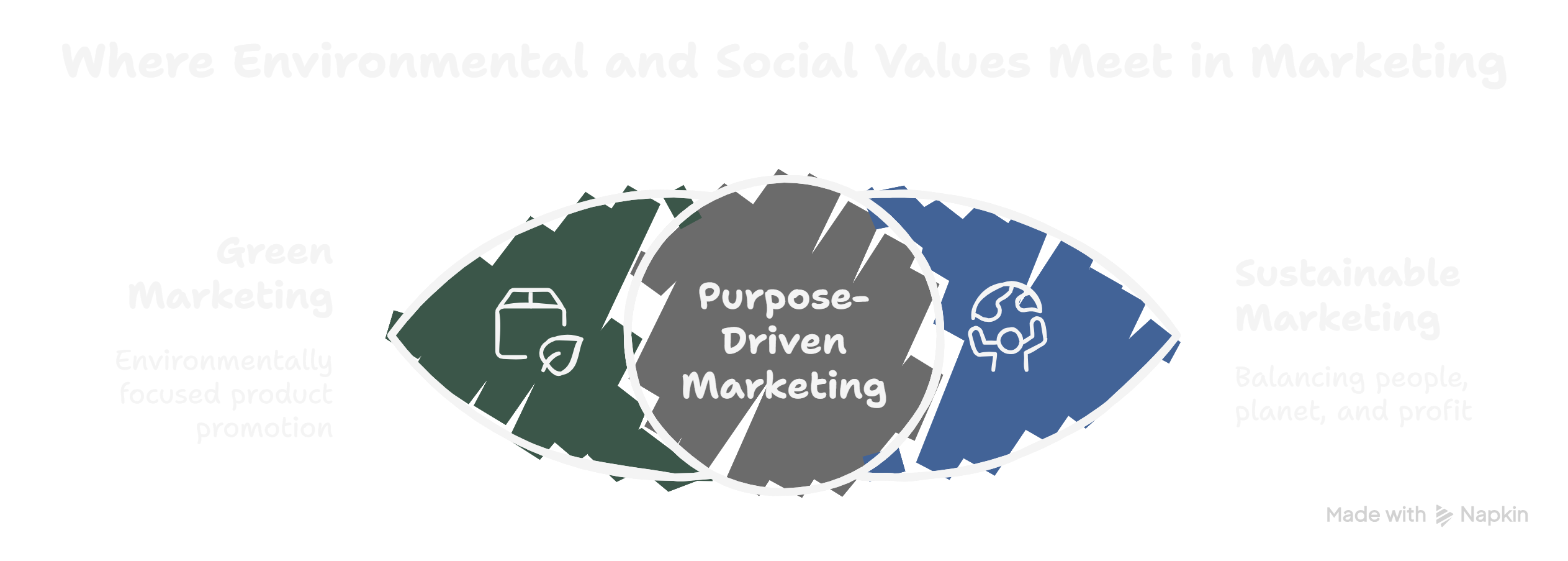
You’ll see the terms “green marketing” and “sustainable marketing” used interchangeably online. They are not the same. Here’s a side-by-side …
Continue reading “Sustainable vs Green Marketing: Key Differences and When to Use Each”
-
Why Feed-Only PMax Campaigns Are the Smartest Choice for Ecommerce stores
by Yash Pal
If you sell products online, you have probably heard about Google’s Performance Max (PMax) campaigns. They have been a hot …
Continue reading “Why Feed-Only PMax Campaigns Are the Smartest Choice for Ecommerce stores”
-
Email Marketing Without Fatiguing Conscious Consumers
by Charanjeev Singh
How to build trust, reduce inbox overload, and engage with intention Email marketing is a powerful tool. It lets …
Continue reading “Email Marketing Without Fatiguing Conscious Consumers”
-
How to Market Vegan Products Without Preaching (or Losing Sales)
by Tapam Jaswal
Marketing vegan products isn’t just about talking to people who already follow a vegan lifestyle. It’s also about connecting with …
Continue reading “How to Market Vegan Products Without Preaching (or Losing Sales)”