



Sustainable vs Green Marketing: Key Differences and When to Use Each
by Tapam JaswalYou’ll see the terms “green marketing” and “sustainable marketing” used interchangeably online. They are not the same. Here’s a side-by-side comparison, compliance guardrails, and a straightforward decision framework, enabling you to select the optimal approach for your brand and avoid greenwashing.
TL;DR
- Green marketing highlights a product or service’s environmental attributes.
- Sustainable marketing is broader. It aligns your business model and messaging with long-term value for people, planet, and profit.
- Use green marketing for verified, product-level eco benefits. Use sustainable marketing when you can credibly connect product, operations, supply chain, and governance to long-term impact goals.
- Back both with evidence and standards or risk non-compliance and lost trust.
Discover the core sustainable marketing principles that can guide your strategy.
What each term actually means
Green marketing
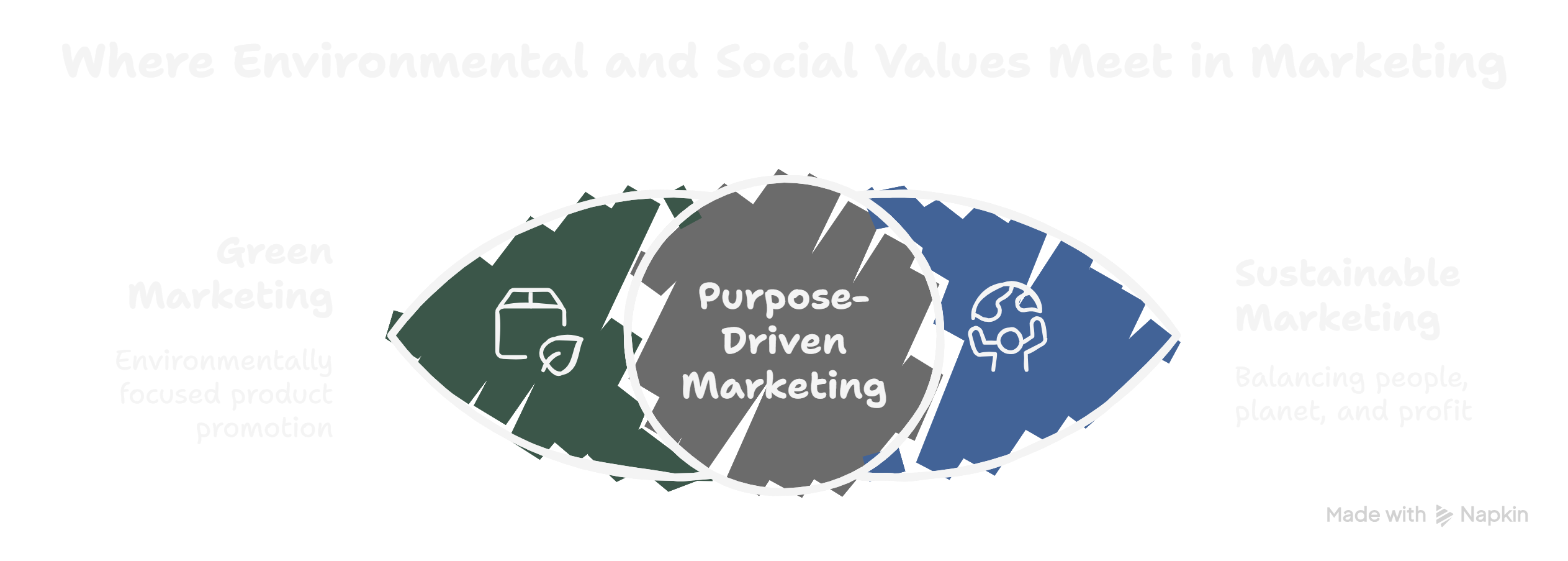
The American Marketing Association defines green marketing as developing and promoting products that are environmentally safe or produced with sensitivity to ecological concerns. In short, it focuses on the environmental side of the story. You can explore more actionable green marketing strategies to see how brands apply this in campaigns.
Sustainable marketing
Drawing from Kotler and modern marketing texts, sustainable marketing means meeting today’s customer needs without compromising the ability of future generations to meet theirs. It integrates the triple bottom line of people, planet, and profit into how you position and grow, an approach deeply aligned with purpose-driven branding.
Why it matters
- Consumers will pay a premium for credible sustainability. PwC’s 2024 global survey finds shoppers are willing to pay an average of 9.7% more for sustainably produced goods.
- Skepticism is rising. In 2025, 62% of consumers believe companies are greenwashing, up from 52% in 2024. Check our post on how to avoid greenwashing in marketing for practical guardrails.
- Rules are tightening. The EU’s Directive (EU) 2024/825 bans generic environmental claims and unverified labels by 2026, while the separate Green Claims Directive continues to progress.
- In the US, the FTC’s Green Guides remain your north star for claims. A formal update has been discussed but remains uncertain; watch areas like “recyclable,” “renewable,” and “carbon neutral.”
Compliance guardrails you can rely on
- ISO 14021 for self-declared environmental claims
Requires clear, specific, verifiable wording. Avoid vague claims like “eco-friendly” without proof. For packaging claims, see Is “Recyclable” the Correct Term to Describe Packaging? - ISO 14024 Type I ecolabels
Third-party certified labels with lifecycle criteria, helpful for on-pack proof. - ISO 14025 Type III EPDs
Independently verified lifecycle data for apples-to-apples comparisons. - GHG Protocol + SBTi
Use Scopes 1–3 to baseline emissions and set targets aligned to climate science.
When to use green marketing
Use it when you have product-level improvements that you can document and verify. For deeper tactics, read How to Market Sustainable Products.
Examples you might promote:
- Materials
Recycled content verified by a Type I label or EPD. - Energy efficiency
Measurable reduction in energy consumption in use. - Packaging
Right-sizing, mono-materials, or compostability proven by standards or third-party testing.
How to write the claim
- Be specific: “This bottle uses 50% post-consumer recycled PET, verified by [EPD/standard].”
- Avoid generic phrases like “eco” or “planet-friendly.” These are restricted in the EU from 2026 if unsubstantiated.
Where this shines
- Product pages, comparison ads, PLPs and filters, packaging, retail shelf talkers.
When to use sustainable marketing
Use it when you can credibly link product + operations + supply chain + governance to long-term outcomes. This holistic perspective mirrors the insights in eCommerce Sustainability Metrics and The Rise of Sustainable eCommerce.
What to include:
- Roadmap and targets
Scope 1–3 baseline, SBTi-aligned targets, annual progress. - Circular design
Repairability, take-back, remanufacturing, and recycled inputs with third-party data. - Social and community impact
Worker wellbeing, supplier codes, living wage programs, and community initiatives.
Where this shines
- Brand storytelling, impact pages, investor decks, recruitment, and annual impact reports. For visual inspiration, see Sustainable Brands on Instagram.
A simple decision framework
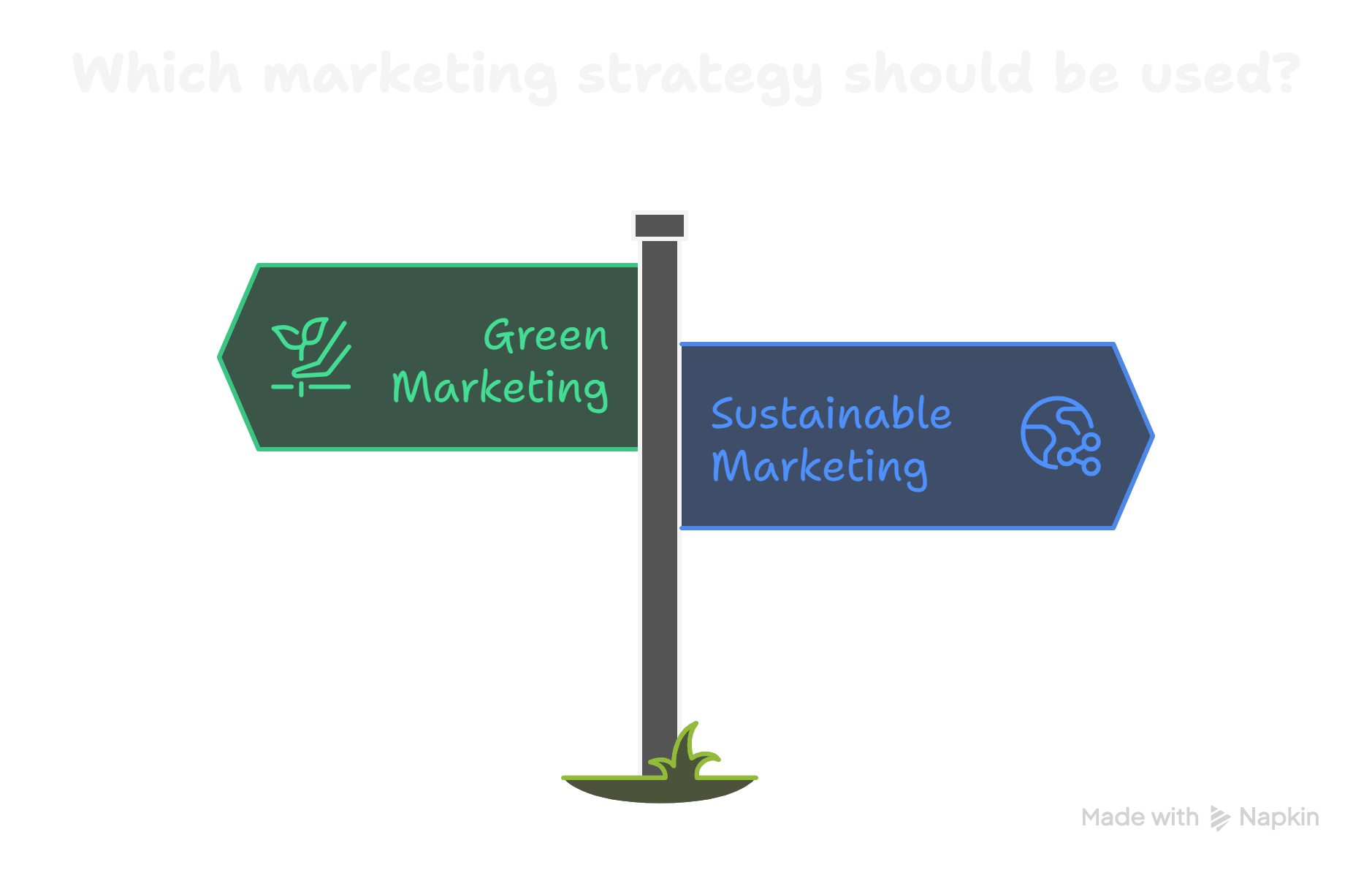
Ask three questions before you decide your approach:
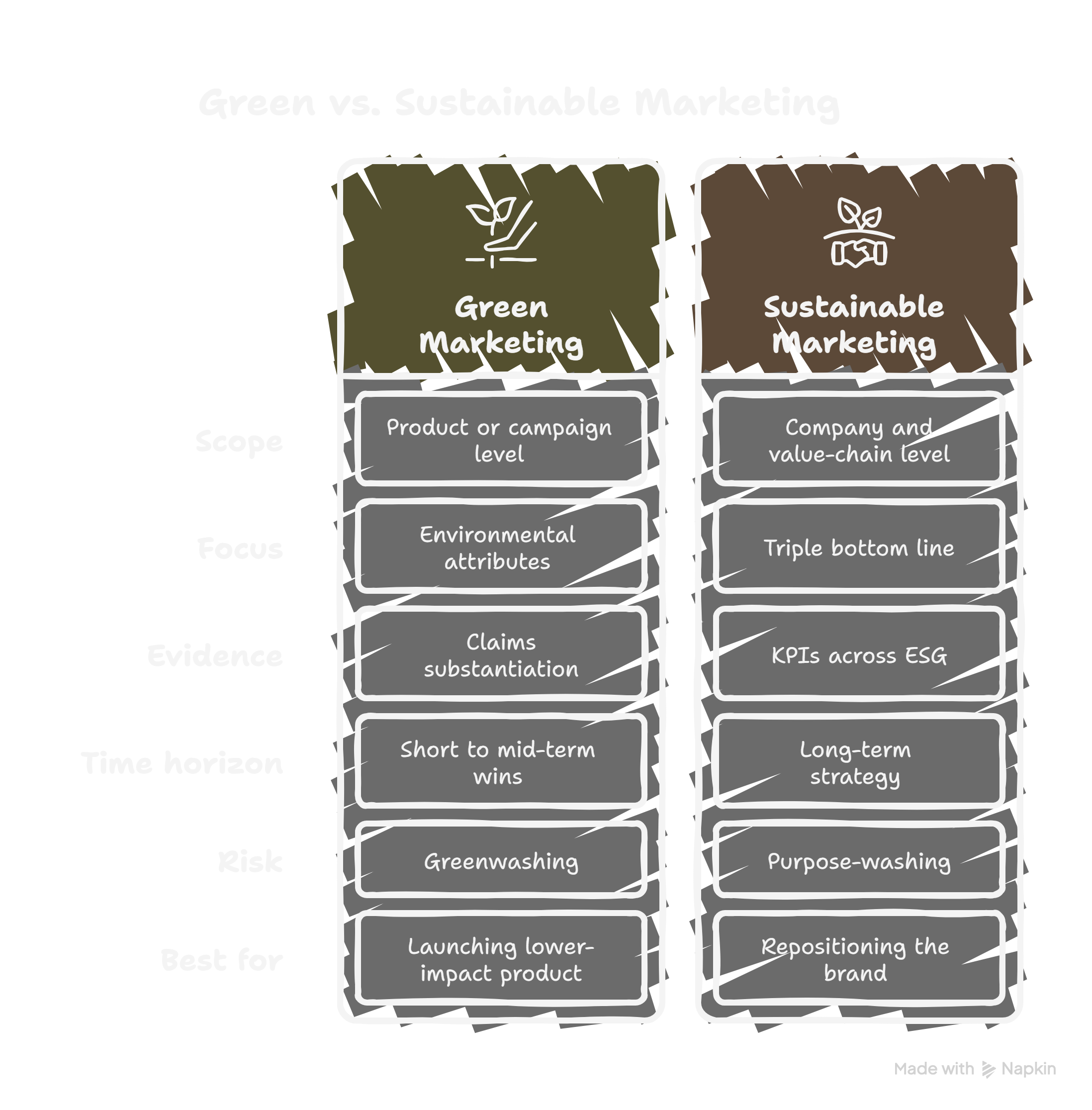
- Scope: Is your proof at the product level or the business level?
Product level fits green marketing. Business level points to sustainable marketing. - Evidence: Do you have third-party verification or clear internal metrics?
- Claims on recyclability, compostability, or carbon need recognized methods and standards.
- Risk: Could a reasonable consumer be misled?
If yes, narrow the claim, add context, or hold the claim until verified.
If you can tick all three with product-level proof, go green marketing. If your proof spans strategy and operations, go sustainable marketing and let product claims sit inside that larger story. This aligns with our guide on Purpose-Driven Content Marketing.
How to write claims that pass the smell test
- Use specific numbers, full dates, and context.
Example: “Reduced packaging weight by 28% since 2023, saving 14 tonnes of plastic per year, verified by ISO 14025 EPD.” - Prefer recognized standards and independent validation.
ISO 14024 Type I labels, EPDs, or accredited labs. - Avoid banned or risky phrasing in the EU from 2026: “climate neutral,” “eco,” “green” if based only on offsets or unverified.
- In the US, watch the FTC Green Guides focus areas like recyclable and carbon claims as updates progress. Explore our article on Shopify Themes and Carbon Emissions to understand how digital footprints tie into these claims.
Measurement that strengthens both approaches
- Carbon: Scopes 1–3 with year-on-year intensity and absolute metrics.
- Circularity: Recycled content share, return and repair rates, materials recovery.
- Packaging: Weight reduction, mono-material share, on-pack labels validated by standards.
- People: Worker turnover, injury rates, supplier audits, grievance resolution times.
- Trust: Track brand lift and message clarity. For a UX-focused approach, explore Dark Mode Accessibility & Sustainable Web Design.
Risks and how to avoid them
- Overclaiming recyclability or compostability without local infrastructure in place.
- Offset-only climate claims in the EU after 2026.
- Purpose talk outrunning operations, which fuels rising public skepticism. See how B Corp brands handle authenticity challenges and insights from the B Corp Conference 2024 UK.
Realistic examples
- Green marketing example
“Our detergent now uses a concentrated formula that cuts packaging weight by 30% and reduces transport emissions per wash by 22%. Verified by an independent LCA and listed in our EPD.” Learn how to describe such claims better in High-Converting Descriptions for Sustainable Products.
Sustainable marketing example
“We’ve committed to SBTi-aligned targets, switched 64% of supplier contracts to renewable-energy clauses, and launched a take-back program with a 38% product recovery rate. See our full target tracker and annual progress.” Discover similar case studies in From Content to Credibility.
FAQs
Are green marketing and sustainable marketing the same?
No. Green is a subset focused on environmental attributes. Sustainable marketing covers people, planet, and profit across the business. Learn more through our Sustainable Marketing Principles guide.
Can small businesses do sustainable marketing?
Yes. Start with a carbon and packaging baseline, publish 1 to 3 material targets, and share progress quarterly. Keep claims specific and verifiable. Review eCommerce Sustainability Metrics for measurable starting points.
Do consumers actually pay more for sustainable products?
Many do. Global research shows an average 9.7% premium willingness. Context matters by category and country. Our post on Purpose-Driven Branding explores this shift.
Is “climate neutral” still allowed?
In the EU, claims relying on offsets are restricted by 2026 unless they meet strict criteria. Safer path: report absolute reductions and the role of residual offsets transparently. Also, check our analysis of Paper Tissues vs Reusable Napkins for how messaging ties to consumer perception.
How we’ll apply this to your brand
- If you have verified product wins right now, we’ll lead with green marketing claims on PDPs, ads, and packaging.
- If your 12-month plan includes SBTi alignment, supplier engagement, and circular pilots, we’ll build a sustainable marketing narrative and let product claims sit inside it.
We’ll keep messaging plain and specific to reduce skepticism and improve conversion. Dive deeper with Transparency in eCommerce and Vegan SEO Strategies for ethical brand storytelling.
If you want help mapping your claims to the right standards and building copy that converts without risk, contact us.
- About the Author
- Latest Posts

I’m a part of CueForGood’s SEO team. I love watching Football and Anime.

-
Google Ads copy with AI: fix the ad group first, then check the combinations
by Kunal Mahajan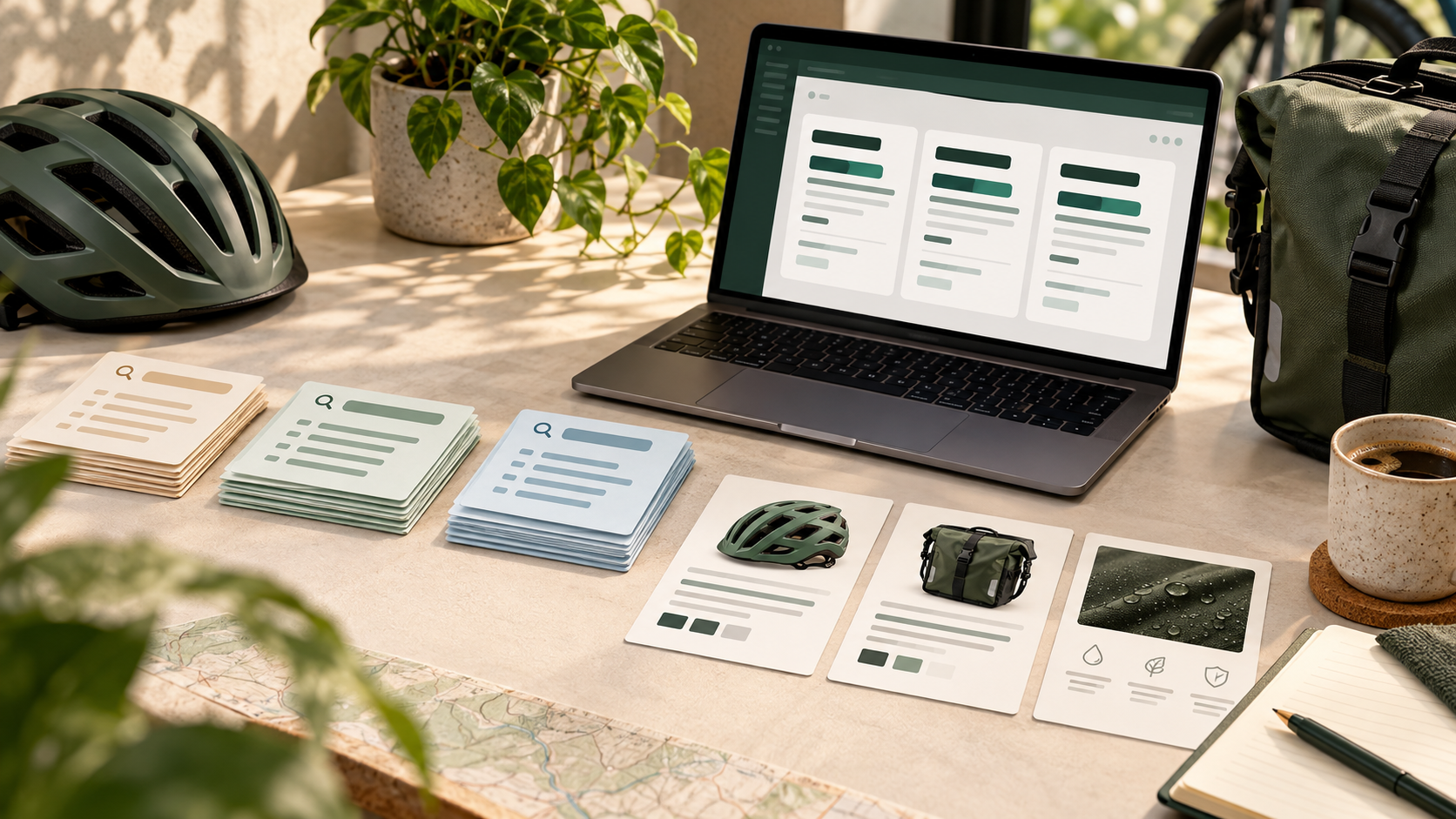
Better ads start with the right searches and the facts on your product page. Say you run an online cycling …
Continue reading “Google Ads copy with AI: fix the ad group first, then check the combinations”
-
Google Shopping for Ecommerce: A Simple Guide to Getting More Sales
by Yash Pal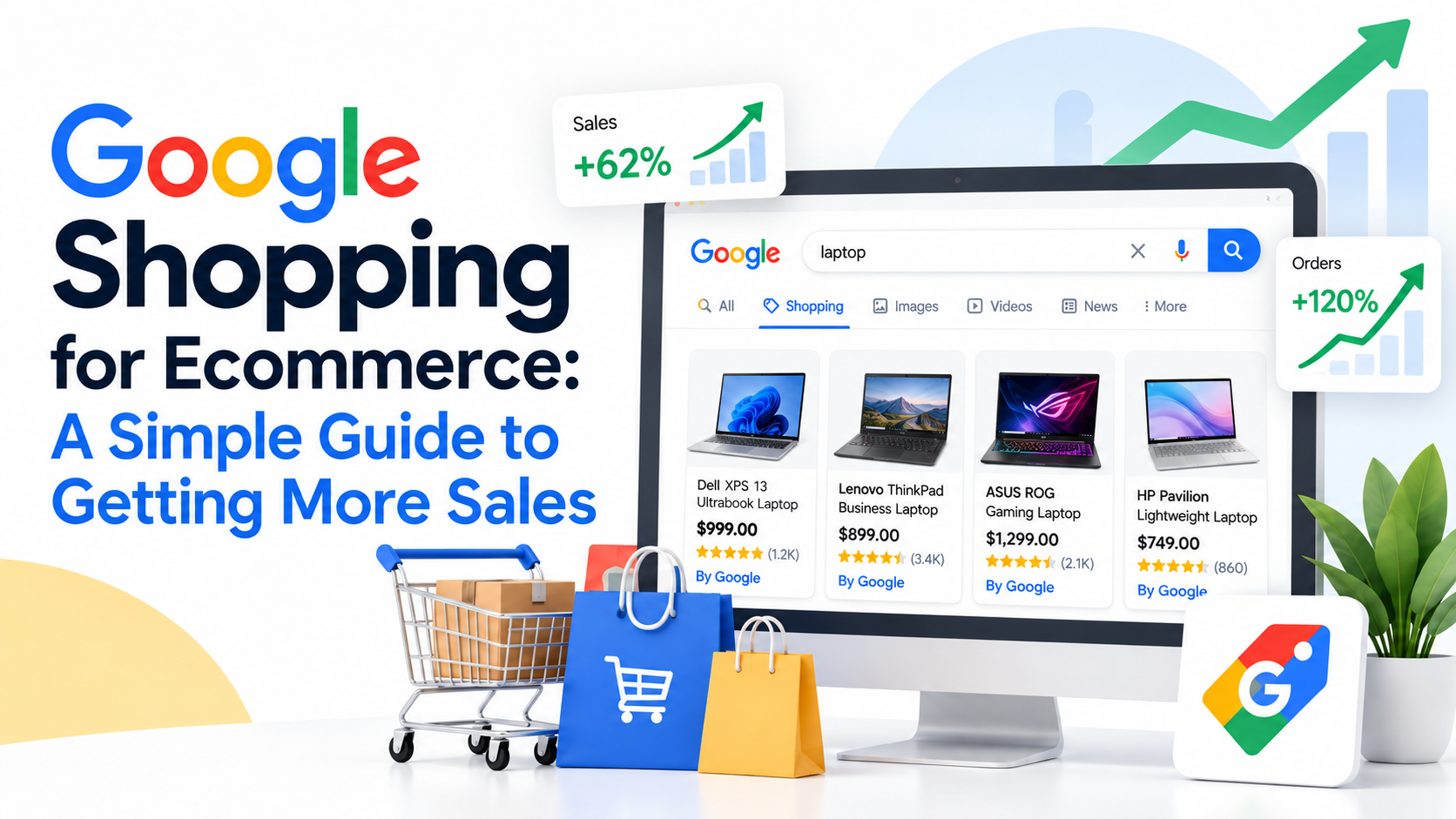
Google Shopping has changed a lot over the years. The way Google Shopping campaigns work today is very different from …
Continue reading “Google Shopping for Ecommerce: A Simple Guide to Getting More Sales”
-
How to audit what AI is saying about your brand in 30 minutes
by Rajiv Singha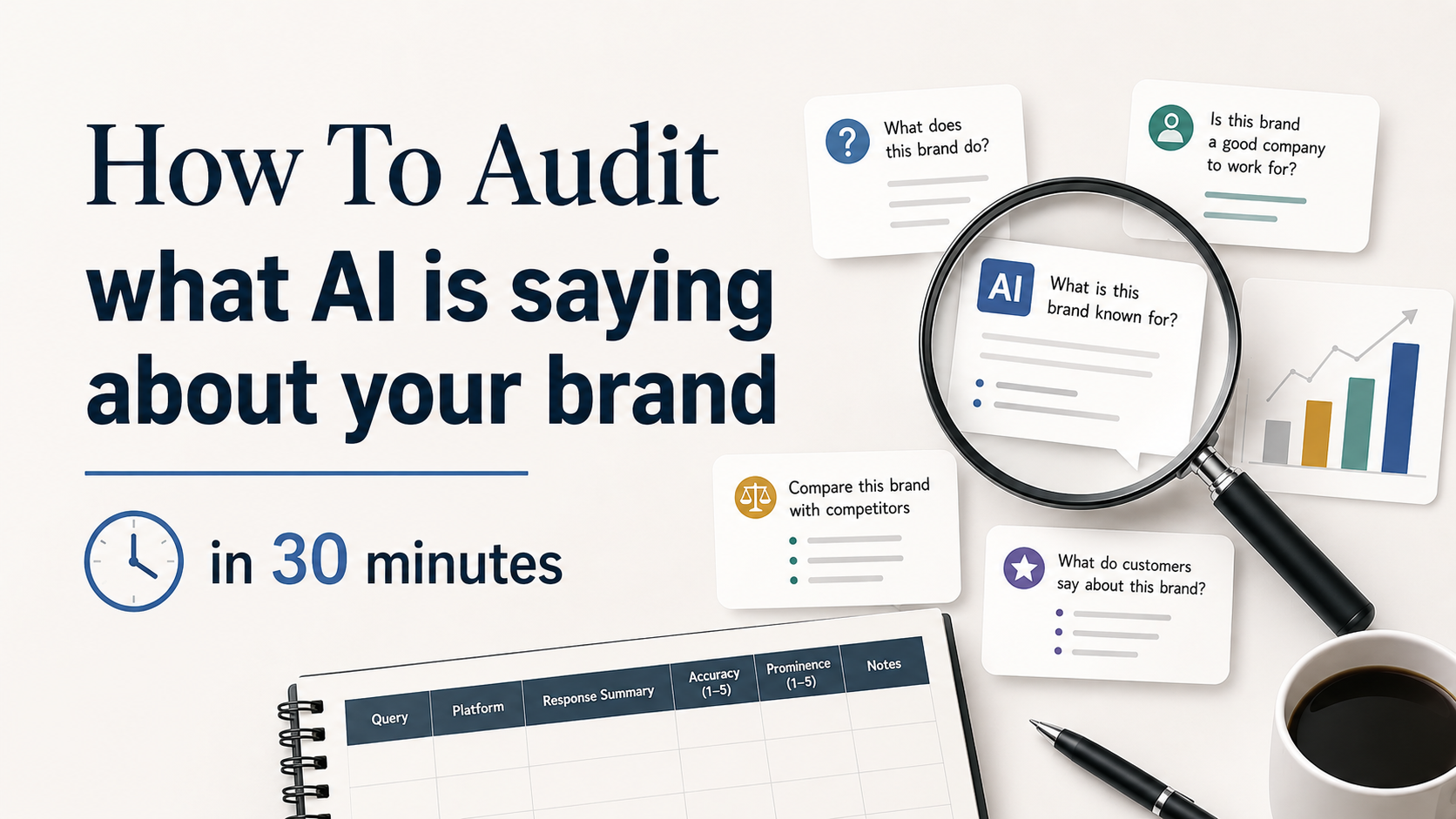
AI visitors convert at 4.4x the rate of traditional organic traffic. And AI search traffic is up 527% year on …
Continue reading “How to audit what AI is saying about your brand in 30 minutes”
-
Sustainable vs Green Marketing: Key Differences and When to Use Each
by Tapam JaswalYou’ll see the terms “green marketing” and “sustainable marketing” used interchangeably online. They are not the same. Here’s a side-by-side …
Continue reading “Sustainable vs Green Marketing: Key Differences and When to Use Each”
-
Why Feed-Only PMax Campaigns Are the Smartest Choice for Ecommerce stores
by Yash Pal
If you sell products online, you have probably heard about Google’s Performance Max (PMax) campaigns. They have been a hot …
Continue reading “Why Feed-Only PMax Campaigns Are the Smartest Choice for Ecommerce stores”
-
Email Marketing Without Fatiguing Conscious Consumers
by Charanjeev Singh
How to build trust, reduce inbox overload, and engage with intention Email marketing is a powerful tool. It lets …
Continue reading “Email Marketing Without Fatiguing Conscious Consumers”